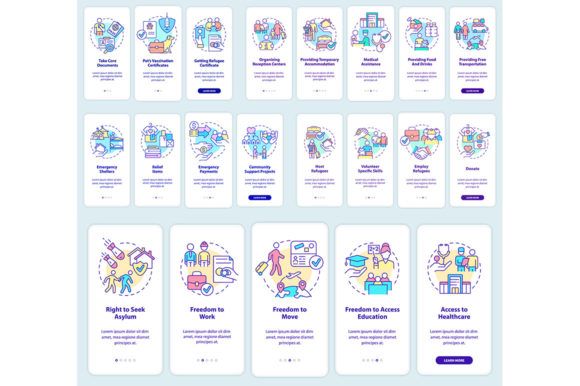
Helping Refugees Onboarding Mobile Apps: A Comprehensive Guide
Understanding the Importance of Mobile App Onboarding for Refugees
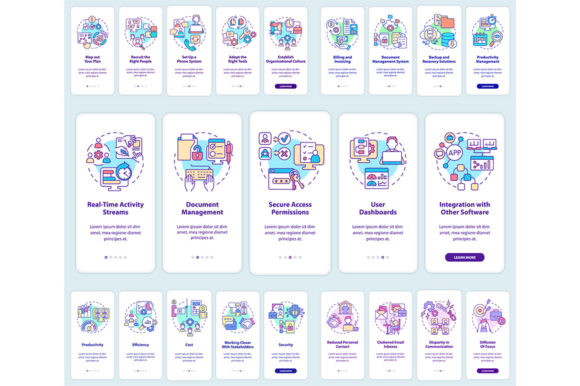
Refugees often face significant challenges when they arrive in a new country, including language barriers, unfamiliarity with local systems, and limited access to resources. Helping Refugees Onboarding Mobile Apps is designed to bridge these gaps by providing a user-friendly, accessible, and informative onboarding experience. These apps are tailored to help refugees navigate essential services, such as healthcare, education, and legal assistance, through a series of intuitive and visually clear mobile app screens.
Key Features of Helping Refugees Onboarding Mobile Apps
- Language Support: The apps offer multiple language options, making it easier for refugees to understand and use the information provided.
- Governmental Support Walkthroughs: Detailed, step-by-step instructions and graphics guide users through various governmental processes, such as applying for asylum or accessing social services.
- User Interface (UI) and User Experience (UX): The apps are designed with a clean, intuitive interface that minimizes confusion and maximizes usability. The use of Myriad Pro-Bold and Regular fonts ensures readability and a professional appearance.
- Product File Formats: Available in EPS, SVG, PNG, JPEG, and AI formats, these apps cater to a wide range of devices and platforms, ensuring accessibility across different devices.
Comparison with Similar Options
While there are other mobile apps and resources available to assist refugees, Helping Refugees Onboarding Mobile Apps stands out for its comprehensive approach and user-centric design. For instance, some general-purpose translation apps may not provide the specific, contextually relevant information that refugees need. Similarly, government websites, while rich in information, can be overwhelming and difficult to navigate without guidance.
Other specialized apps might focus on a single aspect, such as legal aid or healthcare, but Helping Refugees Onboarding Mobile Apps offers a holistic solution, covering a broad range of needs and services. This integrated approach makes it a more versatile and effective tool for refugees.
Strengths and Tradeoffs
One of the key strengths of Helping Refugees Onboarding Mobile Apps is its ability to provide a seamless, guided experience. The inclusion of detailed graphics and step-by-step instructions helps users feel more confident and supported as they navigate unfamiliar systems. Additionally, the multilingual support and clear UI/UX design make the app accessible to a diverse range of users.
However, like any technology, there are tradeoffs. For example, the app's effectiveness depends on the availability of smartphones and internet access, which may not be universal among all refugee populations. Moreover, while the app provides a wealth of information, it cannot replace the need for human interaction and support, especially in complex or sensitive situations.
Best-Fit Situations and Limitations
Helping Refugees Onboarding Mobile Apps is particularly well-suited for refugees who have basic smartphone skills and need a reliable, comprehensive resource to help them settle into their new environment. It is also beneficial for organizations and volunteers who work with refugees, as it can serve as a valuable tool to support their efforts.
However, the app may not be the best choice for individuals who lack access to smartphones or the internet, or those who require more personalized, one-on-one assistance. In such cases, traditional methods, such as in-person support and printed materials, may be more appropriate.
Decision Factors for Choosing Helping Refugees Onboarding Mobile Apps
When deciding whether Helping Refugees Onboarding Mobile Apps is the right choice, consider the following factors:
- Accessibility: Do the intended users have access to smartphones and the internet?
- Language Needs: Are the languages supported by the app suitable for the target audience?
- Scope of Services: Does the app cover the specific services and information needed by the users?
- User Comfort: Are the users comfortable using mobile apps, or do they prefer more traditional methods?
By carefully considering these factors, you can determine whether Helping Refugees Onboarding Mobile Apps is the most suitable option for your needs.
Realistic Examples and Practical Comparisons
For example, a refugee arriving in a new country might need to apply for asylum, find housing, and enroll in a language course. With Helping Refugees Onboarding Mobile Apps, they can access step-by-step instructions and visual guides to complete these tasks, all in their preferred language. In contrast, a general-purpose translation app might only provide basic translations, leaving the user to figure out the rest on their own.
Another practical comparison is with government websites. While these sites contain extensive information, they can be confusing and difficult to navigate, especially for non-native speakers. Helping Refugees Onboarding Mobile Apps simplifies this process by breaking down the information into manageable, easy-to-follow steps.
Conclusion
Helping Refugees Onboarding Mobile Apps offers a robust, user-friendly solution for refugees seeking to navigate their new environment. By providing comprehensive, accessible, and visually clear information, the app supports refugees in accessing essential services and integrating into their new communities. While it may not be the perfect fit for every situation, it is a valuable tool for those with the necessary technology and comfort level. Consider the specific needs and circumstances of your users to determine if Helping Refugees Onboarding Mobile Apps is the right choice for you.